PLEASE POST A COMMENT....!

Post your Signature on any entry..Thank you.

sábado, 13 de septiembre de 2008

F-35. PUSH THE LIMIT.

The US Fighter plane F-35 in a beautiful show all over the sky. Dont miss the music of EVANESCENCE.

URALVAGONZAVOD T-90 TANK.

The GPO Uralvagonzavod T-90 is a Russian main battle tank derived from the T-72, and is currently the most modern tank in the Russian Ground Forces and Indian Army arsenal. The successor to T-72BM, the T-90 uses the gun and 1G46 gunner sights from T-80U, a new engine, and thermal sights. Protective measures include Kontakt-5 ERA, laser warning receivers, the EMT-7 electromagnetic pulse creator for the destruction of magnetic mines and the Shtora infrared ATGM jamming system.

RUSSIAN TROOPS ENTERING GEORGIA. 2008

Russian troops taking the route to Georgia... August,2008.

US MARINES CORPS


ATLANTIC OCEAN (July 10, 2008) An SH-60B assigned to Helicopter Anti-Submarine Squadron Light (HSL) 42) prepares to land on the flight deck of the multi-purpose amphibious assault ship USS Iwo Jima (LHD 7) during the Iwo Jima Expeditionary Strike Group (ESG) composite unit training exercise (COMPTUEX). COMPTUEX provides a realistic training environment to ensure the strike group is capable and ready for its upcoming scheduled deployment. The Iwo Jima ESG is made up of Iwo Jima; the amphibious dock landing ship USS Carter Hall (LSD 50); the amphibious transport dock ship USS San Antonio (LPD 17); the guided-missile cruiser USS Vella Gulf (CG 72); the guided-missile destroyer USS Ramage (DDG 61); all homeported at Norfolk, Va.; the guided-missile destroyer USS Roosevelt (DDG 80), homeported at Mayport, Fla.; and the fast-attack submarine USS Hartford (SSN 768), homeported at Groton, Conn. U.S. Navy photo by Mass Communication Specialist Third Class Michael Starkey

An F/A-18F Super Hornet assigned to Strike Fighter Squadron 102 launches from the aircraft carrier USS Kitty Hawk for the last time in Pacific Ocean, Aug 6, 2008. Carrier Air Wing 5 aircraft flew off Kitty Hawk to join the nuclear-powered aircraft carrier USS George Washington in San Diego. In September, George Washington will replace Kitty Hawk as the Navy's only carrier operating from Japan. U.S. Navy photo by Petty Officer 3rd Class Kyle D. Gahlau


SALAH AH DIN, Iraq (February 15, 2008) - U.S. Army Soldiers talk about the M1128 Stryker Mobile Gun System Vehicle capabilities in Salah ah Din province, Iraq, Feb. 12, 2008. The soldiers are from the 2nd Infantry Division and 101st Airborn Division. Photo by Maj. Johnpaul Arnold, U.S. Army
An F-22 Raptor takes off from Edwards Air Force Base, Calif., Aug. 28 to take part in an aerial refueling test using an alternative jet engine fuel -- a first for an Air Force aircraft. The fuel is a 50/50 mix of JP-8 jet fuel and a natural gas-based fuel. (Lockheed Martin photo)


ATLANTIC OCEAN (Aug. 30, 2008) Aviation Boatswain's Mate Handling 3rd Class Lataf Bush launches an AH-1W Cobra from Marine Medium Helicopter Squadron (HMM) 264 off the flight deck of the multi-purpose amphibious assault ship USS Iwo Jima (LHD 7). Iwo Jima, the flagship of the Iwo Jima Expeditionary Strike Group, is on a scheduled deployment en route to the U.S. 5th and 6th Fleet areas of responsibility supporting maritime security operations. U.S. Navy photo by Mass Communication Specialist Seaman Chad R. Erdmann


U.S. Navy Seaman Michael Cain, left, Petty Officer 3rd Class Nicholas Dahlin and Seaman Nancy Torres, ride a Zodiac inflatable boat through the surf while on safety patrol near the construction area of an elevated causeway during Joint Logistics Over-The-Shore, JLOTS 2008, Camp Pendleton, Calif., July 12, 2008. The sailors are assigned to Amphibious Construction Battalion 1. U.S. Navy photo by Petty Officer 2nd Class Brian P. Caracci

WINDS OF WAR

A U.S. Air Force F-16 Fighting Falcon aircraft sits on a trim pad before an engine run up at Joint Base Balad, Iraq, July 16, 2008. U.S. Air Force photo by Senior Airman Julianne Showalter


A Coldsteel Soldier with 1st Battalion, 327th Infantry Regiment, 1st Brigade Combat Team, 101st Airborne Division, patrols an area near Balad, Iraq during a severe sandstorm. The Coldsteel element teamed up with Iraqi security forces during Operation Balls Pursuit to track down enemy fighters in the area. Photo by Sgt. Richard Rzepka 1st Brigade Combat Team, 101st Airborne Division (AA) Public Affairs


NORFOLK, Va. (July 19, 2008) A Mark-V (MK-V) special operations craft, piloted by special warfare combatant-craft crewmen, transits the coastline as an afternoon thunderstorm passes through off Naval Amphibious Base Little Creek during a naval special warfare capabilities demonstration. The exhibition was part of a four-day Underwater Demolition Team-SEAL Association East Coast Reunion. U.S. Navy photo by Mass Communication Specialist 3rd Class Robyn Gerstenslager


Field artillerymen of Battery A, 2-218th Field Artillery, 41st Infantry Brigade Combat Team, Oregon Army National Guard, fire a 105mm shell from a Howitzer at Yakima Training Grounds, Wash., during the units annual training Aug. 9. Photo by Sgt. Chad Layton of Battery A, 2-218th Field Artillery, Oregon Army National Guard

An F-16 Fighting Falcon aircraft from Joint Base Balad, Iraq, refuels from a KC-135 Stratotanker aircraft from the 763rd Expeditionary Refueling Squadron during a mission over Iraq, Sept. 3, 2008. U.S. Air Force photo by Staff Sgt. Aaron Allmon II

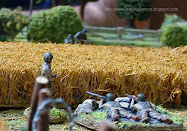
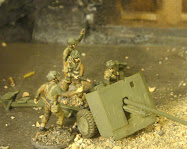
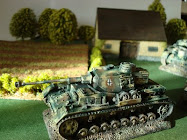
LOS PRIMEROS COMBATES..

Las pocisiones de la unidades beligrantes se encuentran de la siguiente manera en un frente angosto debido a la topografia del terreno. Lo cual hace màs lento el avance motorizado alemán.
A pesar de todo las fuerzas especiles SS han causado grandes bajas a los españoles debido a su gran superioridad aérea y al calibre de sus cañones. Se espera resistencia en los puntos de fortificaciòn españoles.


Dia 1

Ofensiva alemana.

Se lanzan ataques aéreos sobre las unidades del otro lado del frente, en acciòn se lanzan los bombarderos en picado Junkers 87 causando bajas importantes.Misiones de bombardeo de altura sobre las fuerzas republicanas ubicadas al este en Caldens, se divisan dos unidades españolas y son masacradas desde el aire.
Maniobras de reconocimiento en terreno republicano, se divisan 3 batallones de infanteria. A continuaciòn se realiza el ataque de la artilleria de campaña y bombardeo de Junkers 87 ocasionando bajas importantes. Se toma Bufalvent por un batallòn de panzers. Se destruye una unidad española en caldens.

Ofensiva española.

Se sucede el ataque principalmente de artilleria en todo el frente causando grandes bajas en el 1er btn de panzers. El resto del escenario sin novedades significantes.


Dia 2

Ofensiva alemana.

Intento alemán de bombardeo en picado pero la flota es abatida por la defensa aérea.
Se realiza un ataque sobre las baterias AA españolas. dos misiones debilitan las unidades de defensa. A continuación se retira del frente el 1er btn de panzer de Bufalvent. se solicitan refuerzos para esta unidad. Se rompe el frente en la ciudad que abre el frente de batalla. 9 unidades españolas de infanteria son destruidas hasta ahora agregandose tambièn a 2de artilleriade campaña. La aviacion de caza alemana derriba una unidad aèrea española. Se suministra otra flota de Junkers 87B para sustituir la unidad perdida al frente.

Ofensiva española.

Otra unidad aèrea española es destruida por las defensas AA alemanas. No se realizan màs ataques de las tropas republicanas.